
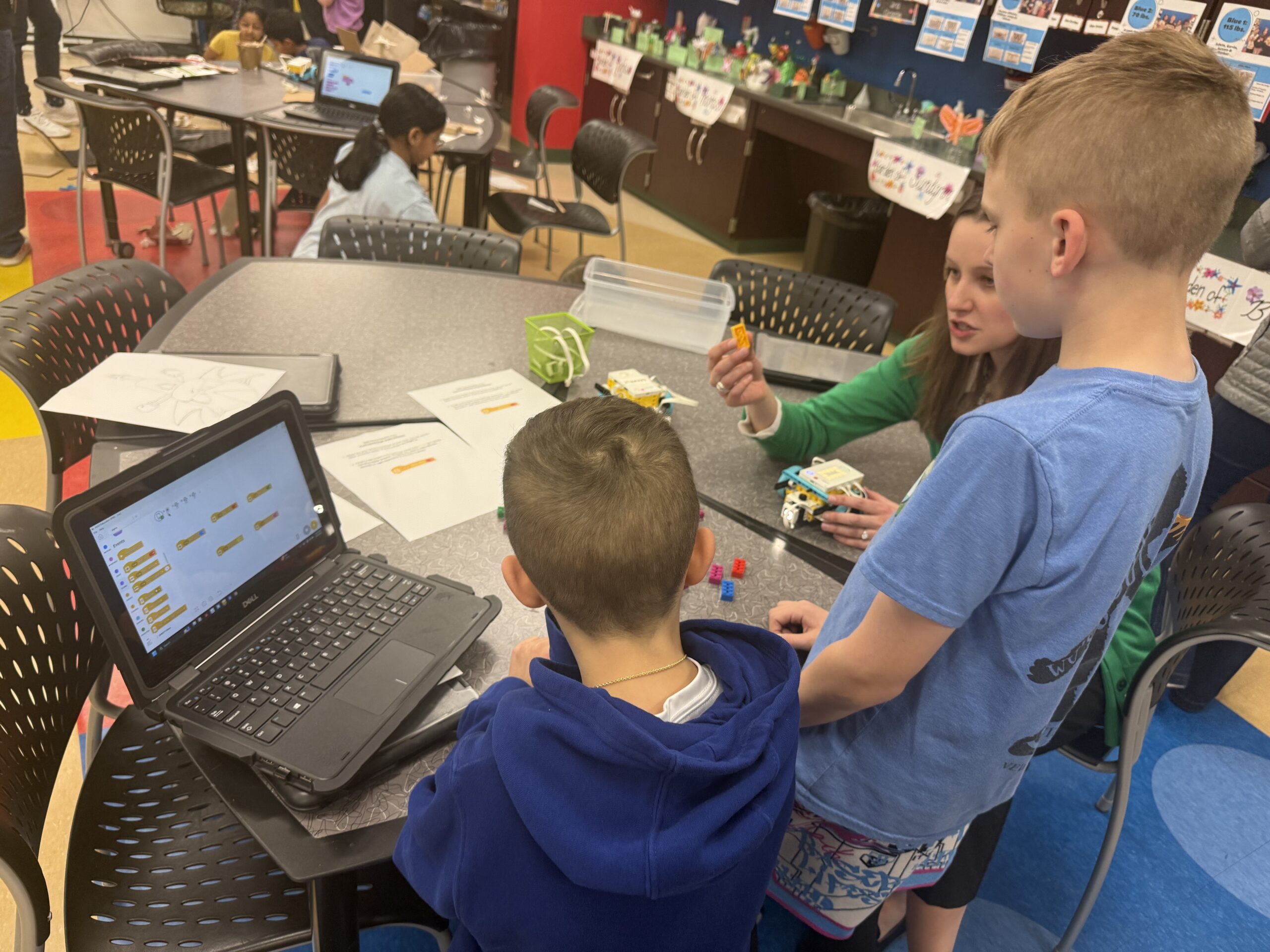
It’s been a while since I last wrote here, but I am excited to get back into the rhythm of reflecting, writing, and sharing. Let me know if there are topics on your mind. First up is debunking this myth that learner-centered is something extra instead of the best way to educate all learners.
High-quality instructional materials have long been the focus of education reform. A well-aligned curriculum can provide a helpful foundation, but curriculum alone doesn’t meet the needs of today’s learners.
To truly engage and prepare students in a world of rapid change — especially now, in the age of AI — we must go beyond delivery. The future of effective Tier 1 instruction lies in the intersection of pedagogy, curriculum, and AI-powered tools.
And the most important shift isn’t just technical. It’s instructional.
AI Changes Everything, But It Can’t Replace Good Teaching
Artificial intelligence is transforming how we live, work, and learn. It’s already showing up in writing tools, language translation, math support, coding, and creative work.
And while some schools rush to ban it, the smarter move is to teach students how to use it thoughtfully and responsibly.
But here’s the truth: AI won’t make instruction better on its own. A fancy tool won’t transform a classroom that’s still designed for compliance and standardization.
In fact,, most generative AI tools used in education—whether for lesson planning, tutoring, or assessment—reflect a default bias toward traditional, teacher-directed instruction. A recent study highlights the pedagogical bias:
“Through analysis of 90 lesson plans from commercial lesson plan generators, we found that AI-generated content predominantly promotes teacher-centered classrooms with limited opportunities for student choice, goal-setting, and meaningful dialogue.”
This pedagogical bias not only reinforces outdated industrial models of schooling, but also limits the transformative potential of AI in education.
The real power comes from using AI in service of strong pedagogy and learner-centered design — not instead of them.
Learner-Centered Instruction: The Anchor in an AI World
In a world where AI can summarize content, solve problems, and generate ideas, the value of human learning shifts.
Students don’t just need to memorize facts. They need to:
- Ask better questions
- Make sense of complex problems
- Apply knowledge in real-world situations
- Use tools (like AI) with judgment and creativity
- Reflect, revise, and grow
That’s exactly what learner-centered design is built to do. It engages learners in personalized, authentic, and competency-based experiences that prepare them for the real world — not just the next test.
Pedagogy + Curriculum + AI = The Future of Learning
AI tools can support personalization, provide real-time feedback, and amplify creativity — but only when combined with the kind of instructional design that puts learners and learning first.
Here’s what happens when we bring these elements together:
Pedagogy: The mindset and methods that focus on learners — not just content. This is where learner-centered practices come in.
Curriculum: High-quality materials that offer a solid foundation — made flexible and relevant through the lens of the learner.
AI-Powered Tools: Technology that can adapt, support, and accelerate — when used intentionally, not passively. Try this
Together, they create responsive, modern classrooms that meet learners where they are and prepare them for what’s next.
What It Looks Like
In action, this might look like:
- A high school student using an AI writing assistant to brainstorm and revise — then reflecting on the process and presenting their work in a student-led conference.
- A middle school class using generative tools to simulate historical debates, then building out portfolios with research and reflections.
- A 3rd-grade team that uses learning progressions and goal-setting to guide each learner’s journey — supported by digital tools that give just-in-time feedback.
This isn’t about replacing teachers. It’s about leveraging the best of what humans can do and what technology can do. Check out these case studies.
Moving Forward
As AI reshapes our world, the question isn’t whether schools will change — it’s how.
Will we double down on rigid systems and outdated models?
Or will we evolve to create learning environments that are dynamic, personalized, and deeply human?
Learner-centered pedagogy is not a trend—it’s grounded in the science of learning, motivation, and development. And when combined with powerful curriculum and smart AI integration, it becomes the most effective strategy we have for reaching all students, in real time, at the Tier 1 level.
And it’s how we help every learner thrive — today and into the future.

0 Comments